
Beyond "Genre": Why 2026 is the Year of "Mood-Based" Selection
Traditional music genres are dead. Discover how progressive retailers are utilizing biometric-aligned music curation and neuro-output categorization to actively drive customer behavior.

For over half a century, the commercial audio industry has organized sound the exact same way a traditional record store does: by genre. If a retail manager wanted an upbeat atmosphere, they selected 'Pop.' If a luxury hotel lobby needed a sophisticated background, they defaulted to 'Jazz.' In 2026, this outdated, completely arbitrary method of categorization is officially dead. Relying on broad musical genres is a remarkably inefficient way to manage a physical commercial space because it entirely ignores the physiological and emotional impact of the sound. A 'Pop' song can be deeply melancholic, and a 'Jazz' track can be incredibly frantic and anxiety-inducing. To truly optimize a retail environment, forward-thinking brands are abandoning traditional genres entirely. Instead, they are categorizing music by its direct 'Neuro-Output'—its scientifically measured ability to trigger specific neurotransmitters like Dopamine, Serotonin, and Oxytocin. By shifting the focus from what a song sounds like to how a song makes the human brain react, businesses can deploy biometric-aligned music curation to literally engineer customer comfort, maximize dwell time, and predictably drive massive increases in sales.
The Fatal Flaw of Traditional Genre Curation
The Science of Biometric-Aligned Music Curation
Dopamine: Engineering the Impulse Buy
Oxytocin & Serotonin: The Architecture of Trust and Dwell Time
The AI Engine: Decoding the Human Response
Legal Safety and the Future of Sensory Branding
Conclusion
The era of selecting commercial music based on arbitrary genres is over. In 2026, the most profitable and successful brick-and-mortar brands understand that their physical spaces are not just product showrooms; they are highly engineered psychological environments. By adopting biometric-aligned music curation and categorizing audio by its specific Neuro-Output, progressive retailers can intentionally trigger the release of Dopamine, Serotonin, and Oxytocin in their shoppers. This scientific approach allows businesses to accurately predict and influence consumer behavior, effortlessly encouraging impulse buys during peak hours and dramatically extending dwell time during slower periods. Stop guessing what your customers want to hear, and start utilizing intelligent AI platforms to provide exactly what their brains need to feel comfortable, engaged, and ready to purchase. Master the chemistry of sound, and completely revolutionize your brand experience.
Recommended for you
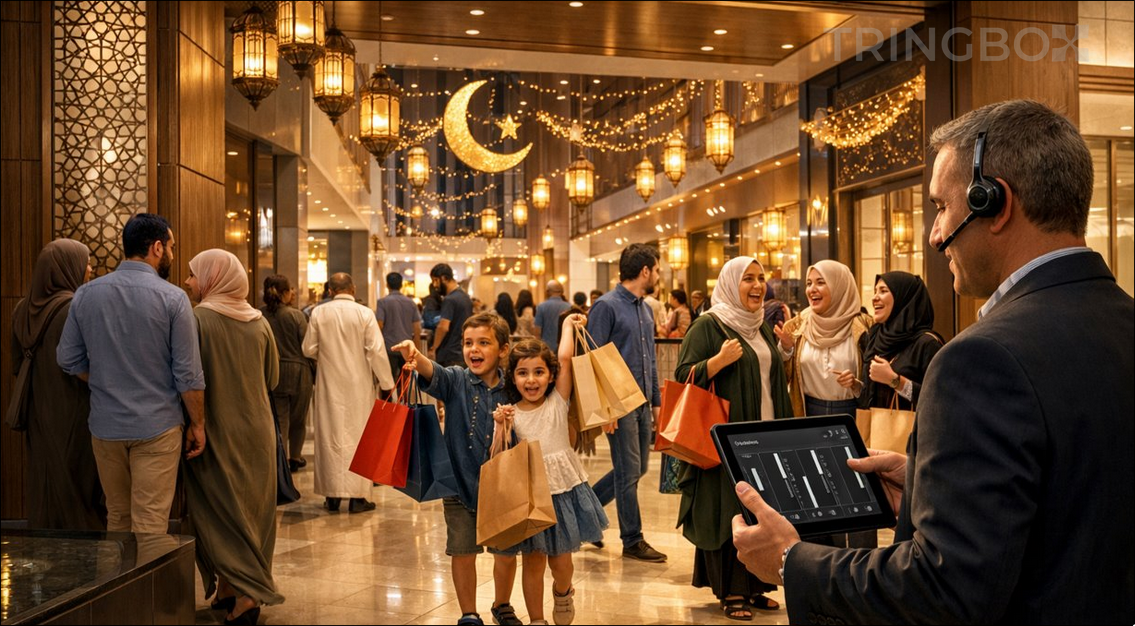
The Ramadan-to-Eid Pivot: Automating the 'Spiritual-to-Celebratory' Transition
As the final stretch of Ramadan 1447 AH unfolds this March 2026, retailers and mall operators are managing one of the most complex cultural transitions in the world. The period of fasting, reflection, and spiritual discipline is rapidly approaching its peak, with Eid al-Fitr expected to be celebrated around March 20-21, depending on the sighting of the crescent moon. For physical spaces, this requires a 'dual-mood' strategy that respects the contemplative nature of the fast during the day while being ready to ignite into high-energy celebration the moment the month of Shawwal begins. By leveraging Tringbox, brands are automating this transition, moving from low-BPM, soul-stirring instrumentals to vibrant 'Festive Pop' without manual intervention. This technological pivot ensures that your store remains a sanctuary for the fasting and a hub for the celebrating, aligning perfectly with the shifting energy of your customers.
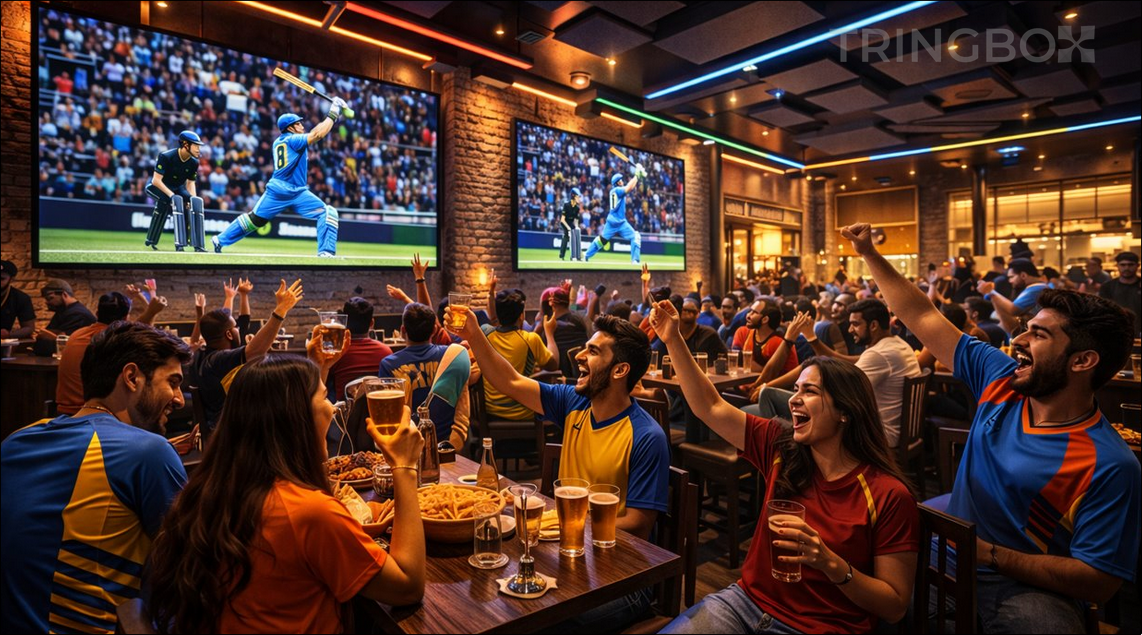
IPL 2026: Designing the 'Stadium-Vibe' for Bars & Quick-Service Restaurants
On March 28, 2026, the roar of the crowd will return to the M. Chinnaswamy Stadium in Bengaluru as the defending champions, Royal Challengers Bengaluru (RCB), kick off the 19th edition of the Indian Premier League. For the next eight weeks, India will be gripped by a fever that transcends sports, transforming every bar, cafe, and Quick-Service Restaurant (QSR) into a satellite stadium. However, simply putting the match on a big screen is no longer enough to win the 'Battle of the Vibe.' In 2026, the most successful F&B outlets are using Tringbox to curate an immersive auditory experience that replicates the high-stakes adrenaline of being in the stands. By utilizing AI to manage 'Hype Cycles,' volume normalization, and regional team anthems, businesses can turn a casual viewer into a loyal fan who stays longer and spends more. Whether you are in a city hosting a match or a thousand miles away, your store's soundscape is the key to capturing the multi-billion dollar IPL economy.
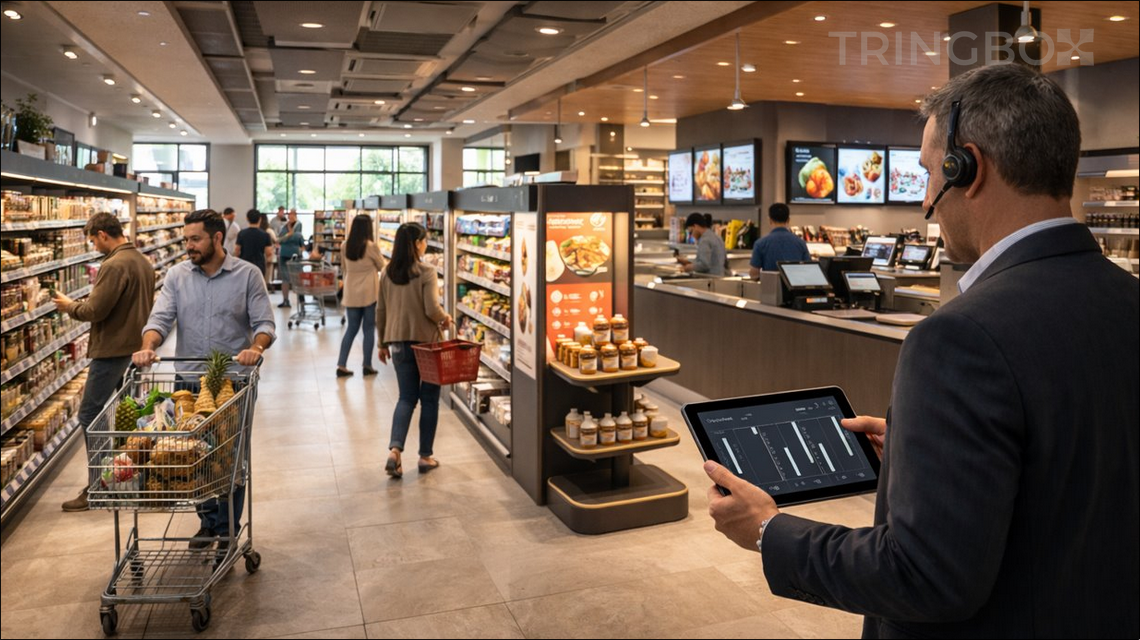
Programmatic In-Store Ads: Using AI to 'Insert' Local Offers into the Music Mix
As we move into mid-March 2026, the retail landscape in India is undergoing a quiet but massive digital transformation. The concept of 'Retail Media' is no longer confined to sponsored search results on an app; it has moved onto the physical shop floor. The biggest trend this year is Programmatic In-Store Audio. For supermarkets, hypermarkets, and large retail chains, the ability to communicate directly with a shopper at the 'Point of Decision' is the holy grail of marketing. By utilizing Tringbox, retailers are now able to automatically insert 10-second 'localized' audio ads into their curated music streams. These aren't generic, pre-recorded announcements; they are AI-generated, data-triggered inserts based on real-time stock levels, local weather shifts, or store-specific footfall. This is the year programmatic audio goes mainstream, turning the store's background music into a dynamic, revenue-generating engine that speaks to the shopper in the right aisle, at the right time.
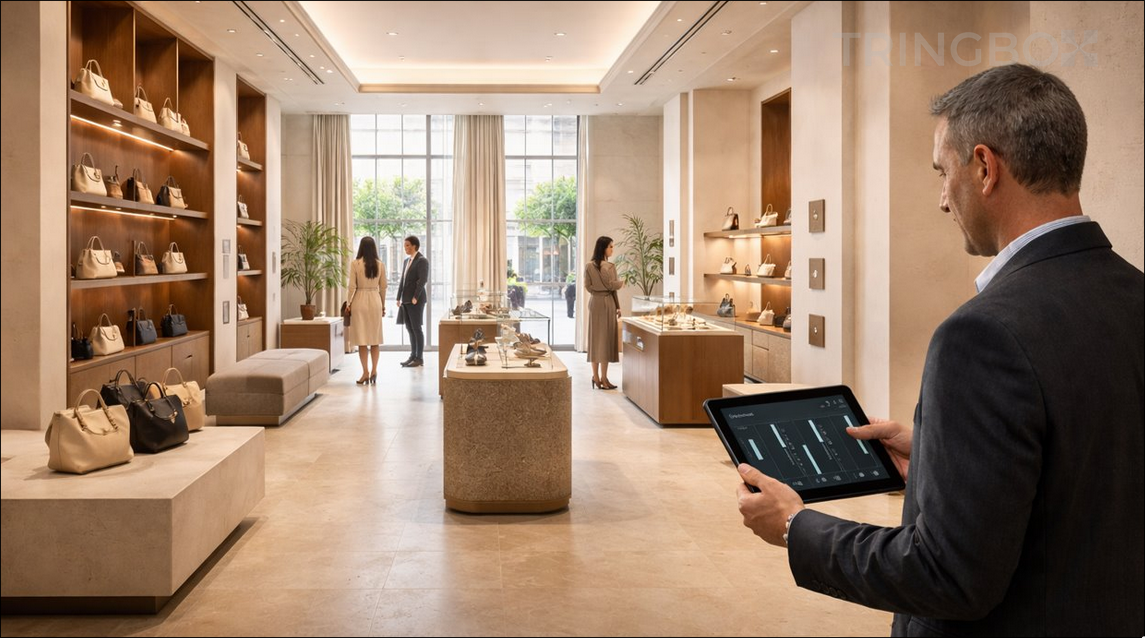
Bio-Resonant Dining: How AI Syncs Restaurant Music to 'Digestion Rhythms'
In the hyper-competitive world of high-end hospitality in 2026, the guest experience has moved far beyond the plate. Fine-dining restaurants and luxury hotel cafes are no longer just selling flavors; they are selling physiological states. One of the most significant emerging trends this year is Bio-Resonant Dining—the practice of using specific sound frequencies to align with the human body's natural digestive rhythms. By utilizing Tringbox, elite venues are now deploying AI-curated soundscapes that feature 528Hz frequencies, scientifically known to reduce 'dining stress' and activate the parasympathetic nervous system. This transition from background noise to functional audio doesn't just make guests feel better; it strategically prepares the body for the 'Rest and Digest' phase, leading to a measurable increase in dessert and post-meal drink sales. In this deep dive, we explore the intersection of neuro-gastronomy and AI audio to understand how the right frequency can turn a standard dinner into a holistic healing experience.
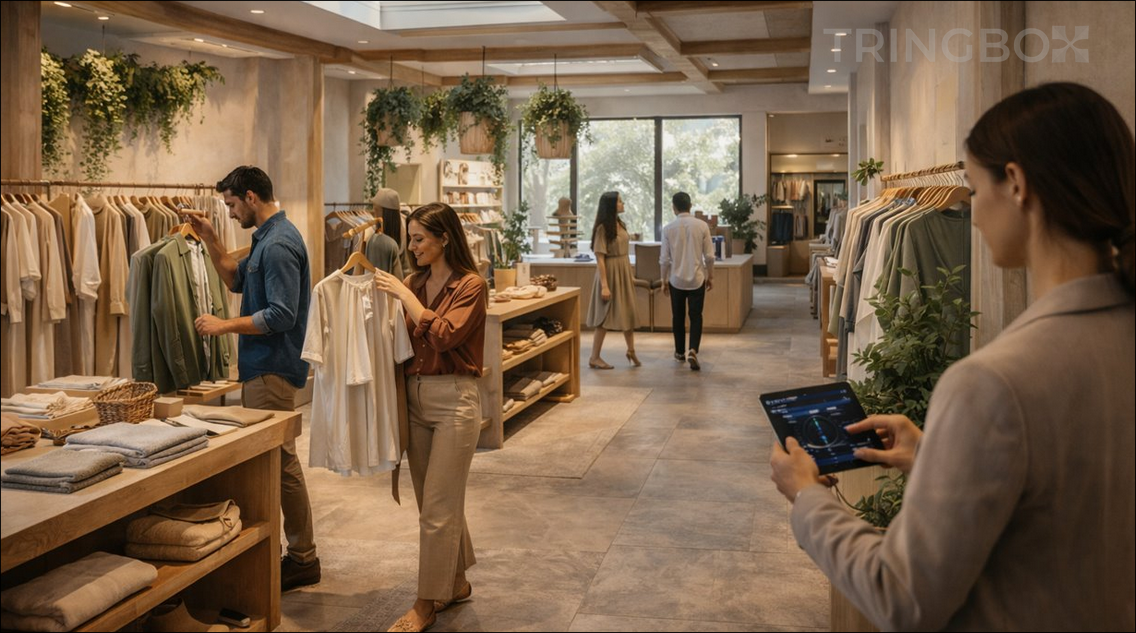
The 'Eco-Acoustic' Label: Using AI Soundscapes to Authenticate Sustainable Fashion Brands
As we approach World Forestry Day on March 21st, 2026, the global conversation around sustainability has shifted from mere 'recycled labels' to the total sensory experience of a brand. For sustainable apparel brands, organic skincare boutiques, and vegan cafes, the challenge is to make the customer 'feel' the ethics of the brand the moment they step inside. This is where Eco-Acoustics comes into play. By utilizing Tringbox, forward-thinking businesses are moving beyond generic stock music and integrating AI-processed field recordings—actual sounds of forests, wind, and water—to create an auditory environment that literally breathes. This isn't just background noise; it is a powerful psychological tool that reinforces an 'Organic' brand message, aligns with the eco-conscious values of Gen Z and Millennial shoppers, and creates a biological sense of calm that mirrors the natural world.
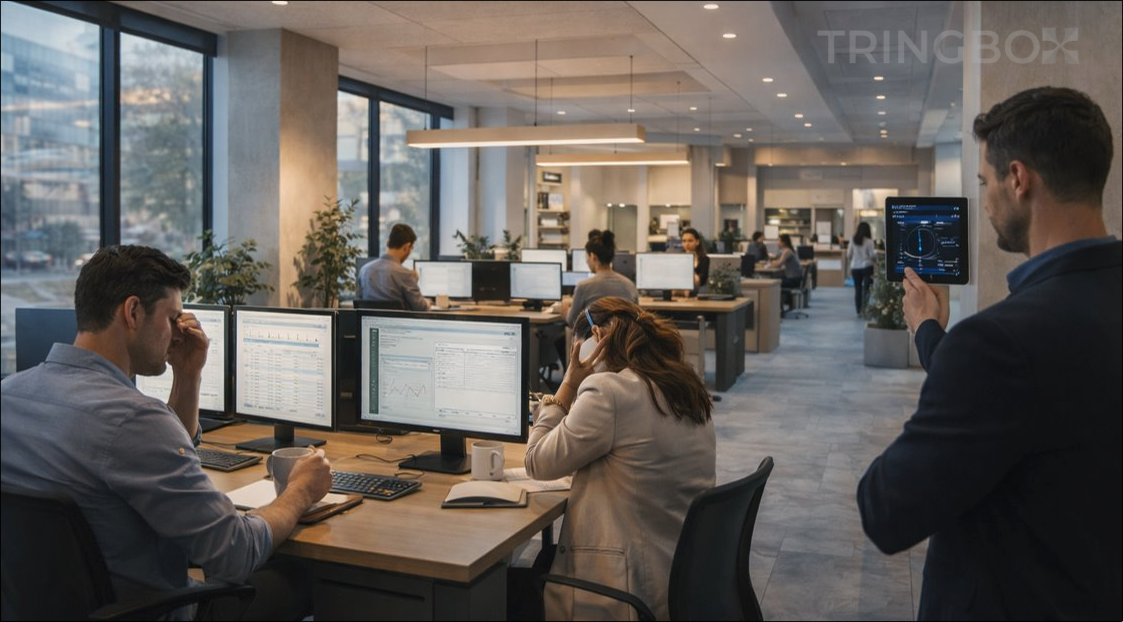
The 'Anti-Fatigue' Office: Using AI Music to Combat the March Year-End Burnout
As the calendar turns toward March 31st, the atmosphere in Indian corporate offices, CA firms, and banks undergoes a radical shift. The financial year-end brings with it a mountain of audits, tax filings, and closures, often resulting in marathon shifts and high-stress environments. While caffeine is the traditional fuel for these late nights, it often leads to a cycle of crashes and diminished focus. Forward-thinking organizations are now turning to a more sustainable cognitive enhancer: Auditory Biohacking. Using Tringbox, offices are implementing AI-driven soundscapes that utilize Binaural Beats and Lo-Fi textures to keep the brain in a consistent 'Flow State.' By managing the auditory environment, businesses can significantly reduce mental fatigue, improve data entry accuracy, and maintain employee morale during the most demanding month of the year.

The 2026 Retail Heatwave: Can Music 'Cool Down' Your Store?
As March 2026 brings an early and aggressive heatwave across India, retailers are facing a unique challenge: keeping customers comfortable enough to stay and shop. While air conditioning is the standard solution, there is a powerful, invisible tool that most businesses overlook—The Psychology of Sound. Through a phenomenon known as Cross-modal Perception, the human brain often blends sensory inputs, meaning what we hear can actually change how we feel physically. By leveraging adaptive technology from Tringbox, savvy retailers are now using 'airy,' 'light,' and 'high-frequency' music to subconsciously lower the perceived temperature of their stores. In an era where every degree of cooling adds to the electricity bill, using AI to create a 'sonic breeze' is not just a marketing gimmick; it is a strategic operational advantage.

Sound as Hygiene: Masking 'Clinic Anxiety' During the March Allergy Season
As March 2026 brings the peak of allergy and flu season across India, diagnostic centers, dental clinics, and pharmacies are witnessing their highest footfall of the year. However, a crowded waiting room often becomes a breeding ground for Clinic Anxiety—a psychological state where the sounds of coughing, muffled medical consultations, and administrative chatter increase patient stress. In the modern healthcare landscape, 'hygiene' is no longer just about sanitized surfaces; it is about Auditory Hygiene. By utilizing Tringbox, healthcare providers are now implementing 'Privacy Masking'—a strategy where AI-tuned music frequencies specifically target and 'drown out' intrusive noises. This creates a sonic barrier that protects patient confidentiality and transforms a chaotic waiting area into a professional, calming sanctuary that promotes healing and trust.

Managing the Holi Rush: How Adaptive In-Store Music Reduces Customer Stress During Peak Festive Shopping
The weeks leading up to Holi are a double-edged sword for Indian retailers. On one hand, footfall is at an all-time high as shoppers search for the perfect white kurtas, organic gulal, and festive hampers. On the other hand, the sheer volume of people in supermarkets and clothing stores creates an environment of extreme sensory overload. When a store is packed, the noise levels rise, temperatures often climb, and the 'rush' mentality takes over. Traditional retail management focuses on staffing and inventory, but the most sophisticated players in 2026 are focusing on the invisible architecture of the store: the soundscape. By using adaptive technology from Tringbox, retailers are now able to modulate the physiological state of their customers in real-time. Instead of adding to the chaos with high-energy Bollywood tracks during peak hours, smart stores are switching to calming, lower-BPM instrumentals to keep shoppers relaxed, focused, and willing to spend more time in the aisles despite the crowd.

The Science of 'Spring Fever': Using High-Tempo Music to Drive Foot Traffic
As March 2026 rolls in, a biological phenomenon known as Spring Fever begins to take hold of consumers across the globe. This isn't just a poetic phrase; it is a physiological reaction to increasing daylight and rising temperatures that boosts dopamine and energy levels. For retailers, this shift presents a massive opportunity to align the store’s 'heartbeat' with the customer's internal state. By utilizing Tringbox, businesses are moving away from the sluggish, low-energy soundtracks of winter and embracing high-tempo, high-energy audio. Scientific studies show that when a store's background music matches the upbeat 'Spring' mood, foot traffic conversion increases and customers move through the store with a more purposeful, positive intent. In this guide, we dive into the neuro-chemistry of spring and how AI-driven music curation can turn seasonal biology into bottom-line revenue.
Beyond "Genre": Why 2026 is the Year of "Mood-Based" Selection
Traditional music genres are dead. Discover how progressive retailers are utilizing biometric-aligned music curation and neuro-output categorization to actively drive customer behavior.
By
Sanjay Verma
Published
Feb 27, 2026
For over half a century, the commercial audio industry has organized sound the exact same way a traditional record store does: by genre. If a retail manager wanted an upbeat atmosphere, they selected 'Pop.' If a luxury hotel lobby needed a sophisticated background, they defaulted to 'Jazz.' In 2026, this outdated, completely arbitrary method of categorization is officially dead. Relying on broad musical genres is a remarkably inefficient way to manage a physical commercial space because it entirely ignores the physiological and emotional impact of the sound. A 'Pop' song can be deeply melancholic, and a 'Jazz' track can be incredibly frantic and anxiety-inducing. To truly optimize a retail environment, forward-thinking brands are abandoning traditional genres entirely. Instead, they are categorizing music by its direct 'Neuro-Output'—its scientifically measured ability to trigger specific neurotransmitters like Dopamine, Serotonin, and Oxytocin. By shifting the focus from what a song sounds like to how a song makes the human brain react, businesses can deploy biometric-aligned music curation to literally engineer customer comfort, maximize dwell time, and predictably drive massive increases in sales.
The Fatal Flaw of Traditional Genre Curation
The Science of Biometric-Aligned Music Curation
Dopamine: Engineering the Impulse Buy
Oxytocin & Serotonin: The Architecture of Trust and Dwell Time
The AI Engine: Decoding the Human Response
Legal Safety and the Future of Sensory Branding
Conclusion
The era of selecting commercial music based on arbitrary genres is over. In 2026, the most profitable and successful brick-and-mortar brands understand that their physical spaces are not just product showrooms; they are highly engineered psychological environments. By adopting biometric-aligned music curation and categorizing audio by its specific Neuro-Output, progressive retailers can intentionally trigger the release of Dopamine, Serotonin, and Oxytocin in their shoppers. This scientific approach allows businesses to accurately predict and influence consumer behavior, effortlessly encouraging impulse buys during peak hours and dramatically extending dwell time during slower periods. Stop guessing what your customers want to hear, and start utilizing intelligent AI platforms to provide exactly what their brains need to feel comfortable, engaged, and ready to purchase. Master the chemistry of sound, and completely revolutionize your brand experience.
Recommended for you
The Ramadan-to-Eid Pivot: Automating the 'Spiritual-to-Celebratory' Transition
As the final stretch of Ramadan 1447 AH unfolds this March 2026, retailers and mall operators are managing one of the most complex cultural transitions in the world. The period of fasting, reflection, and spiritual discipline is rapidly approaching its peak, with Eid al-Fitr expected to be celebrated around March 20-21, depending on the sighting of the crescent moon. For physical spaces, this requires a 'dual-mood' strategy that respects the contemplative nature of the fast during the day while being ready to ignite into high-energy celebration the moment the month of Shawwal begins. By leveraging Tringbox, brands are automating this transition, moving from low-BPM, soul-stirring instrumentals to vibrant 'Festive Pop' without manual intervention. This technological pivot ensures that your store remains a sanctuary for the fasting and a hub for the celebrating, aligning perfectly with the shifting energy of your customers.
IPL 2026: Designing the 'Stadium-Vibe' for Bars & Quick-Service Restaurants
On March 28, 2026, the roar of the crowd will return to the M. Chinnaswamy Stadium in Bengaluru as the defending champions, Royal Challengers Bengaluru (RCB), kick off the 19th edition of the Indian Premier League. For the next eight weeks, India will be gripped by a fever that transcends sports, transforming every bar, cafe, and Quick-Service Restaurant (QSR) into a satellite stadium. However, simply putting the match on a big screen is no longer enough to win the 'Battle of the Vibe.' In 2026, the most successful F&B outlets are using Tringbox to curate an immersive auditory experience that replicates the high-stakes adrenaline of being in the stands. By utilizing AI to manage 'Hype Cycles,' volume normalization, and regional team anthems, businesses can turn a casual viewer into a loyal fan who stays longer and spends more. Whether you are in a city hosting a match or a thousand miles away, your store's soundscape is the key to capturing the multi-billion dollar IPL economy.
Programmatic In-Store Ads: Using AI to 'Insert' Local Offers into the Music Mix
As we move into mid-March 2026, the retail landscape in India is undergoing a quiet but massive digital transformation. The concept of 'Retail Media' is no longer confined to sponsored search results on an app; it has moved onto the physical shop floor. The biggest trend this year is Programmatic In-Store Audio. For supermarkets, hypermarkets, and large retail chains, the ability to communicate directly with a shopper at the 'Point of Decision' is the holy grail of marketing. By utilizing Tringbox, retailers are now able to automatically insert 10-second 'localized' audio ads into their curated music streams. These aren't generic, pre-recorded announcements; they are AI-generated, data-triggered inserts based on real-time stock levels, local weather shifts, or store-specific footfall. This is the year programmatic audio goes mainstream, turning the store's background music into a dynamic, revenue-generating engine that speaks to the shopper in the right aisle, at the right time.
Bio-Resonant Dining: How AI Syncs Restaurant Music to 'Digestion Rhythms'
In the hyper-competitive world of high-end hospitality in 2026, the guest experience has moved far beyond the plate. Fine-dining restaurants and luxury hotel cafes are no longer just selling flavors; they are selling physiological states. One of the most significant emerging trends this year is Bio-Resonant Dining—the practice of using specific sound frequencies to align with the human body's natural digestive rhythms. By utilizing Tringbox, elite venues are now deploying AI-curated soundscapes that feature 528Hz frequencies, scientifically known to reduce 'dining stress' and activate the parasympathetic nervous system. This transition from background noise to functional audio doesn't just make guests feel better; it strategically prepares the body for the 'Rest and Digest' phase, leading to a measurable increase in dessert and post-meal drink sales. In this deep dive, we explore the intersection of neuro-gastronomy and AI audio to understand how the right frequency can turn a standard dinner into a holistic healing experience.
The 'Eco-Acoustic' Label: Using AI Soundscapes to Authenticate Sustainable Fashion Brands
As we approach World Forestry Day on March 21st, 2026, the global conversation around sustainability has shifted from mere 'recycled labels' to the total sensory experience of a brand. For sustainable apparel brands, organic skincare boutiques, and vegan cafes, the challenge is to make the customer 'feel' the ethics of the brand the moment they step inside. This is where Eco-Acoustics comes into play. By utilizing Tringbox, forward-thinking businesses are moving beyond generic stock music and integrating AI-processed field recordings—actual sounds of forests, wind, and water—to create an auditory environment that literally breathes. This isn't just background noise; it is a powerful psychological tool that reinforces an 'Organic' brand message, aligns with the eco-conscious values of Gen Z and Millennial shoppers, and creates a biological sense of calm that mirrors the natural world.
The 'Anti-Fatigue' Office: Using AI Music to Combat the March Year-End Burnout
As the calendar turns toward March 31st, the atmosphere in Indian corporate offices, CA firms, and banks undergoes a radical shift. The financial year-end brings with it a mountain of audits, tax filings, and closures, often resulting in marathon shifts and high-stress environments. While caffeine is the traditional fuel for these late nights, it often leads to a cycle of crashes and diminished focus. Forward-thinking organizations are now turning to a more sustainable cognitive enhancer: Auditory Biohacking. Using Tringbox, offices are implementing AI-driven soundscapes that utilize Binaural Beats and Lo-Fi textures to keep the brain in a consistent 'Flow State.' By managing the auditory environment, businesses can significantly reduce mental fatigue, improve data entry accuracy, and maintain employee morale during the most demanding month of the year.
The 2026 Retail Heatwave: Can Music 'Cool Down' Your Store?
As March 2026 brings an early and aggressive heatwave across India, retailers are facing a unique challenge: keeping customers comfortable enough to stay and shop. While air conditioning is the standard solution, there is a powerful, invisible tool that most businesses overlook—The Psychology of Sound. Through a phenomenon known as Cross-modal Perception, the human brain often blends sensory inputs, meaning what we hear can actually change how we feel physically. By leveraging adaptive technology from Tringbox, savvy retailers are now using 'airy,' 'light,' and 'high-frequency' music to subconsciously lower the perceived temperature of their stores. In an era where every degree of cooling adds to the electricity bill, using AI to create a 'sonic breeze' is not just a marketing gimmick; it is a strategic operational advantage.
Sound as Hygiene: Masking 'Clinic Anxiety' During the March Allergy Season
As March 2026 brings the peak of allergy and flu season across India, diagnostic centers, dental clinics, and pharmacies are witnessing their highest footfall of the year. However, a crowded waiting room often becomes a breeding ground for Clinic Anxiety—a psychological state where the sounds of coughing, muffled medical consultations, and administrative chatter increase patient stress. In the modern healthcare landscape, 'hygiene' is no longer just about sanitized surfaces; it is about Auditory Hygiene. By utilizing Tringbox, healthcare providers are now implementing 'Privacy Masking'—a strategy where AI-tuned music frequencies specifically target and 'drown out' intrusive noises. This creates a sonic barrier that protects patient confidentiality and transforms a chaotic waiting area into a professional, calming sanctuary that promotes healing and trust.
Managing the Holi Rush: How Adaptive In-Store Music Reduces Customer Stress During Peak Festive Shopping
The weeks leading up to Holi are a double-edged sword for Indian retailers. On one hand, footfall is at an all-time high as shoppers search for the perfect white kurtas, organic gulal, and festive hampers. On the other hand, the sheer volume of people in supermarkets and clothing stores creates an environment of extreme sensory overload. When a store is packed, the noise levels rise, temperatures often climb, and the 'rush' mentality takes over. Traditional retail management focuses on staffing and inventory, but the most sophisticated players in 2026 are focusing on the invisible architecture of the store: the soundscape. By using adaptive technology from Tringbox, retailers are now able to modulate the physiological state of their customers in real-time. Instead of adding to the chaos with high-energy Bollywood tracks during peak hours, smart stores are switching to calming, lower-BPM instrumentals to keep shoppers relaxed, focused, and willing to spend more time in the aisles despite the crowd.
The Science of 'Spring Fever': Using High-Tempo Music to Drive Foot Traffic
As March 2026 rolls in, a biological phenomenon known as Spring Fever begins to take hold of consumers across the globe. This isn't just a poetic phrase; it is a physiological reaction to increasing daylight and rising temperatures that boosts dopamine and energy levels. For retailers, this shift presents a massive opportunity to align the store’s 'heartbeat' with the customer's internal state. By utilizing Tringbox, businesses are moving away from the sluggish, low-energy soundtracks of winter and embracing high-tempo, high-energy audio. Scientific studies show that when a store's background music matches the upbeat 'Spring' mood, foot traffic conversion increases and customers move through the store with a more purposeful, positive intent. In this guide, we dive into the neuro-chemistry of spring and how AI-driven music curation can turn seasonal biology into bottom-line revenue.
Trusted by Industry Leaders
Recognized by leading innovative platforms

NVIDIA Inception
AI Innovation Program

MongoDB for Startups
Database & Infrastructure Support

AWS Startups
Cloud Computing Resources

Salesforce for Startups
Business Growth Platform
Trusted by Industry Leaders
Recognized and backed by the world's most innovative platforms
NVIDIA Inception
AI Innovation Program

Zoho for Startups
Startup Growth Support

DPIIT Startup India
Government Recognized Startup
MongoDB for Startups
Database Support Program
AWS Startups
Cloud & Scaling Support
Salesforce for Startups
Business Growth Platform
What is Tringbox InStore AI Music
Tringbox InStore AI Music is a smart music system for shops, cafes, offices, gyms, and public spaces. Instead of playing the same playlist every day, it automatically plays the right music based on what is happening in your space at that moment. You don't need to change anything, music adjusts on its own.
What Tringbox Does
Real Time Environment Reading
Understands what customers emotionally need at every moment
Automatic Music Selection
Continuously adapting the perfect soundtrack throughout the day
Effortless Ambience
No playlists, no manual switching, no guesswork just magic
What is Tringbox InStore AI Music
Tringbox InStore AI Music is a smart music system for shops, cafes, offices, gyms, and public spaces. Instead of playing the same playlist every day, it automatically plays the right music based on what is happening in your space at that moment. You don't need to change anything, music adjusts on its own.
Live Context
Environmental Sensors
AI Engine
Neural Processing
Music Metrics
Audio Analysis
Instruments
Neuro Output
Brain Chemistry
Discover Your Perfect Ambiance
Tringbox Adapts Perfectly to any Venue type
No venues found for ""
Research & Evidence
Science Behind Tringbox
Neuroscience research on soundscapes
Dwell Time
More browsing
Lower BPM music triggers dopamine release.
Perception
Premium feel
Familiar harmonics enhance trust.
Experience
Repeat visits
Oxytocin release creates familiarity.
Conversion
Impulse buys
Dopamine improves reward anticipation.
Research & Evidence
The Science Behind Tringbox
Decades of peer-reviewed neuroscience research proves how engineered soundscapes influence human behavior and drive measurable business outcomes.
Dwell Time
Customers browse longer
Lower BPM music triggers dopamine release, keeping customers comfortable enough to stay longer without realizing why.
Perception
Premium brand feel
Familiar harmonic structures increase serotonin, reducing decision stress and enhancing trust in your brand.
Experience
Higher repeat visits
Oxytocin release through emotionally safe soundscapes creates subconscious familiarity and comfort.
Conversion
Impulse purchases up
Dopamine elevation improves reward anticipation and reduces friction during decision making.
How to Get Started
Transform your venue in 4 simple steps
Subscribe to Tringbox
Choose a plan and activate your subscription
Share Your Store Details
Our team helps you in a quick onboarding call
AI Training (Upto 72 Hrs)
We tune the engine specifically for your brand
Login & Play
No hardware needed. Works on any device.
How to Get Started
Transform your venue's atmosphere in four simple steps. No complex setup, no hardware required.
Subscribe to Tringbox
Choose a plan and activate your subscription
Share Your Store Details
Our team helps you in a quick onboarding call
AI Training (Upto 72 Hrs)
We tune the engine specifically for your brand
Login & Play
No hardware needed. Works on any device.
How Tringbox is Ambiance
Adaptive music for any environment
Yes
No
No
Yes
No
Yes
No
Yes
Limited
Yes
Yes
No
Limited
300K+
No hardware. No setup. No friction.
How Tringbox is Different
Intelligent music that reads your environment and delivers the perfect soundtrack.
Yes
No
No
Yes
No
Yes
No
Yes
Limited
Yes
Yes
No
Limited tracks
300,000+ tracks
This reads like SaaS, not audio. No hardware. No setup. No friction.